
APT-Q-27 represents a sophisticated adversary group that has repeatedly targeted financial institutions with tailored malware campaigns. The lack of publicly available technical detail on how to analyze suspected samples creates a significant knowledge gap for defenders. This post supplies a methodical, step‑by‑step framework that covers environment preparation, static and dynamic analysis, reverse engineering, network correlation, and memory forensics. The guidance is intended for analysts who require a rigorous, reproducible approach to uncover the capabilities and indicators of APT-Q-27 malware.
What is APT-Q-27 and why does it target financial institutions?
APT-Q-27 is a state‑sponsored threat actor that has demonstrated a preference for financial services due to the high value of monetary assets and the potential for large‑scale data exfiltration. The malware associated with this group typically exhibits the following characteristics:
- Stealthy persistence mechanisms that survive reboots and antivirus scans.
- Encrypted command and control (C2) traffic to evade network detection.
- Use of legitimate banking APIs for credential harvesting and transaction manipulation.
- Modular architecture that allows the attacker to inject additional payloads on demand.
Understanding these traits is essential for tailoring the analysis workflow to the specific threat profile.
How to set up a safe analysis environment for suspected APT-Q-27 malware?
Isolation is the first line of defense. The following configuration ensures that the malware cannot escape the analysis sandbox:
- Deploy a dedicated virtual machine (VM) with no network adapters attached to the host network.
- Enable snapshot functionality to allow rapid rollback after each test.
- Use a read‑only file system for the operating system and a writable, isolated drive for the malware sample.
- Disable shared folders and clipboard integration between host and guest.
- Configure the VM to use a virtual network interface that routes traffic through a controlled capture point.
Once the environment is established, capture a baseline of system activity by running a clean VM instance for a defined period. This baseline will aid in distinguishing malicious behavior from normal operations.
What static analysis techniques are most effective against APT-Q-27 samples?
Static analysis provides early insight into the malware’s structure without execution. Key steps include:
- File format identification using header signatures and entropy analysis.
- Extraction of embedded strings, URLs, and cryptographic keys.
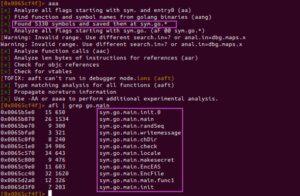
- Disassembly of the binary to reveal function boundaries and API calls.
- Identification of packers or obfuscation layers by detecting known signatures or anomalous entropy spikes.
- Cross‑referencing imported functions against known malicious libraries.
When a packer is detected, unpack the binary in a controlled environment to expose the underlying code. Document all findings in a structured format, noting any suspicious patterns such as repeated use of certain system calls or hard‑coded credentials.
Which dynamic analysis methods reveal the behavioral profile of APT-Q-27 malware?
Dynamic analysis captures runtime behavior, which is critical for understanding persistence, privilege escalation, and exfiltration tactics. The recommended approach is:
- Execute the sample in the isolated VM while monitoring system calls with a syscall tracer.
- Record file system changes, registry modifications, and process creation events.
- Capture network traffic using a packet capture tool configured to filter only the VM’s traffic.
- Observe memory usage patterns, especially the allocation of encrypted payloads.
- Log any attempts to modify system services or scheduled tasks.
Analyze the collected logs to identify the sequence of actions performed by the malware. Pay particular attention to any attempts to disable security tools or to establish persistence through non‑standard mechanisms.
How to extract and interpret indicators of compromise from APT-Q-27 artifacts?
Indicators of compromise (IOCs) are the fingerprints that enable detection and mitigation. Extraction involves:
- Parsing network logs for domain names, IP addresses, and TLS fingerprints.
- Scanning file system changes for newly created or modified files with known malicious hashes.
- Identifying registry keys that are added or altered during execution.
- Extracting cryptographic material used for C2 encryption or payload signing.
Interpretation requires mapping each IOC to a detection rule or mitigation strategy. For example, a newly created service with a name that matches known malicious patterns can be blocked by a host‑based intrusion detection system. Document each IOC with its source, confidence level, and recommended action.
What reverse engineering steps should be taken to understand the code base of APT-Q-27?
Reverse engineering provides deep insight into the malware’s logic and capabilities. The process includes:
- Reconstructing the control flow graph to identify the main execution path.
- Disassembling critical functions that handle encryption, C2 communication, and persistence.
- Tracing the use of cryptographic primitives to determine key derivation methods.
- Locating hard‑coded strings that may reveal target accounts or banking APIs.
- Analyzing obfuscated code segments by applying deobfuscation routines or manual patching.
Throughout the reverse engineering effort, maintain a versioned repository of patches and annotations. This practice ensures reproducibility and facilitates collaboration among analysts.
How to correlate network traffic with APT-Q-27 command and control activity?
Network correlation is essential for identifying the C2 infrastructure used by the malware. Steps include:
- Extracting TLS certificates and server names from captured traffic.
- Matching observed IP addresses against known malicious IP lists.
- Analyzing DNS queries for domain generation algorithm (DGA) patterns.
- Inspecting HTTP headers and payloads for custom protocols or steganographic channels.
- Comparing traffic timing and volume against baseline to detect anomalous exfiltration.
Use statistical analysis to differentiate legitimate banking traffic from malicious C2 communication. Document any discovered C2 endpoints with their associated cryptographic parameters and communication protocols.
What memory forensics procedures uncover hidden persistence mechanisms of APT-Q-27?
Memory forensics can reveal transient artifacts that are not present on disk. The procedure involves:
- Capturing a full memory dump of the VM at multiple points during execution.
- Scanning for injected DLLs or code segments in process memory.
- Identifying hidden processes or threads that may be used for stealth.
- Extracting encrypted payloads that are loaded into memory but never written to disk.
- Analyzing the Windows kernel for hooks or modifications to system calls.
These findings often expose persistence mechanisms such as reflective DLL injection or kernel‑mode rootkits. Record the memory addresses and signatures of any discovered artifacts for future detection.
How to document findings and produce a comprehensive analysis report?
A structured report ensures that insights are actionable and shareable. The report should contain:
- An executive summary that outlines the malware’s objectives and impact.
- A detailed methodology section describing the tools and techniques used.
- Findings organized by category: static analysis, dynamic behavior, network activity, memory artifacts, and IOCs.
- Recommendations for detection, prevention, and remediation.
- Appendices that include raw logs, code snippets, and IOC tables.
Use consistent formatting and clear labeling throughout the document. This approach facilitates peer review and integration into broader threat intelligence feeds.
Protocol/Artifact Reference
Below is a concise reference of protocols and artifacts commonly associated with APT-Q-27 malware:
- HTTP/HTTPS with custom headers for C2 communication.
- DNS queries employing domain generation algorithms.
- TLS certificates with self‑signed or compromised root authorities.
- Encrypted payloads using AES‑256 in CBC mode.
- Registry keys under HKLM\Software\Microsoft\Windows\CurrentVersion\Run for persistence.
- Scheduled tasks created under Task Scheduler with hidden triggers.
- Memory‑resident DLLs loaded via reflective injection.
These artifacts should be cross‑referenced against the IOCs documented earlier to validate detection rules and improve defensive coverage.