
[ OPERATIONAL_CREDENTIAL ]
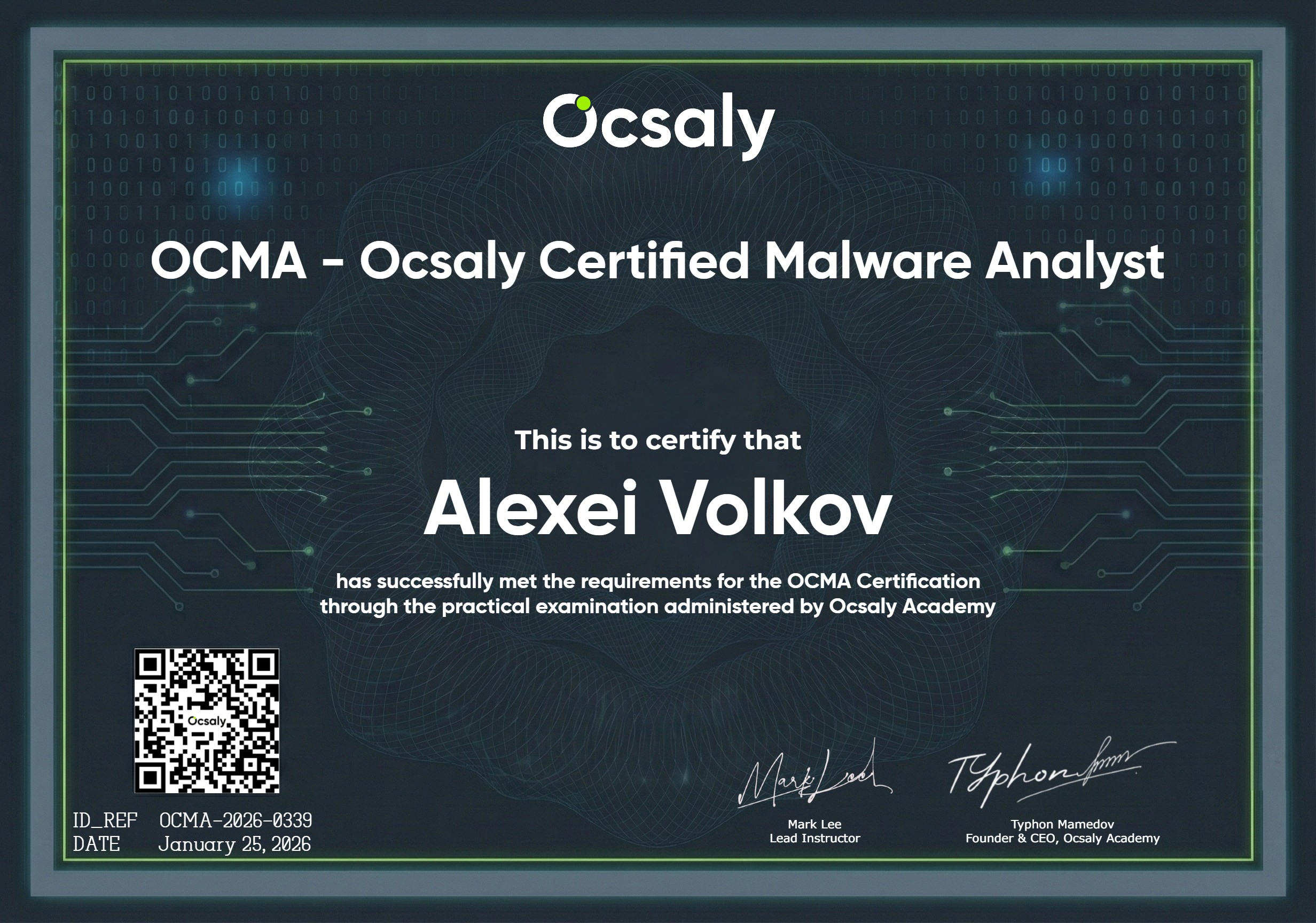
[ OPERATIONAL_INCLUSIONS ]
- 24-Hour Practical Analytical Exam
- 50+ Hours of Advanced Malware Labs
- Lifetime Access & Systematic Updates
- 580,000+ Operator Community Access
- Analyst-Grade Certification ID
// ACCESS GRANTED UPON REGISTRATION
Courses in this track
Articles for this track
- execve System Call Explained: How Linux Runs Programs (C and Assembly Examples)
- Process Injection Explained: Techniques, MITRE T1055 and How to Detect It
- Stack Buffer Overflow Explained: How It Works and the Protections That Stop It
- x86-64 Registers and Assembly Explained: Cheat Sheet for Beginners [CPU Simulator]
- Beyond the Code: Mapping the DNA of Windows Executables
- p5.1_decompilation.logic // The Ghost in the Machine.
- p5.0_disasm.core // Binary Deconstruction: The Art of Disassembly
- p3.4_env.setup // Equipping the Lab: The Reverse Engineer’s Toolset
- p4.3_elf.headers // The Identity Card of a Binary
- p4.2_asm.link // The Binary Architect: Assembling & Linking
- p4.1_cross.o // Cross-Architecture Warfare & Toolchains
- p4.0_live.debug // Dynamic Analysis & The Debugger’s Perspective
- p3.3_highlevel.code // High-Level Languages & Reverse Engineering
- p3.2_assembler.pipeline // From Assembly Source to Executable Binary
- p3.1_asm.encoding // Machine Code, Assembly, and Instruction Encoding
- p3.0_env.recon // The Reverse Engineer’s Toolkit
- p2.1_asm.logic // Assembly Language – The CPU Dialect
- p2.0_stack.heap // Memory Architecture & The Stack
- p1.1_binary.vision // Bits, Bytes, and Hexadecimal
- p1.0_init.sys // Entry Point: The Reverse Engineer’s Mindset